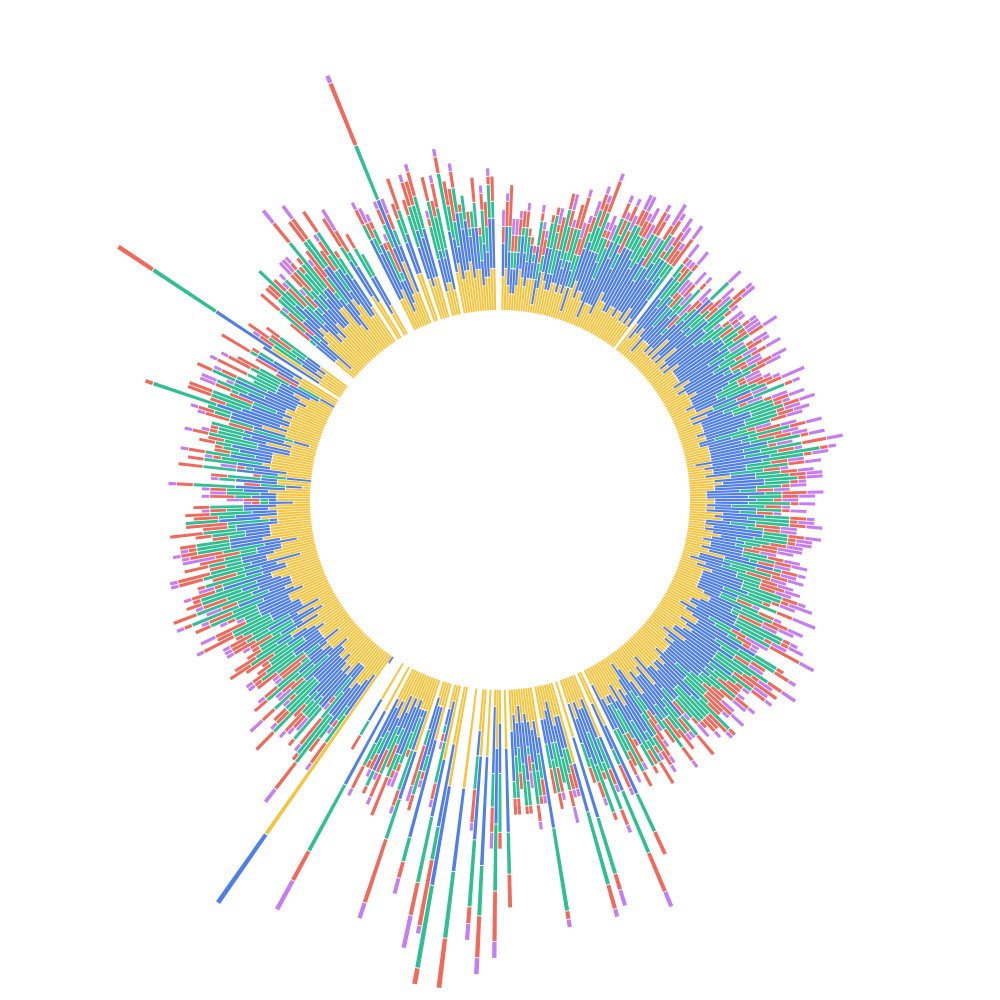
About a week ago our daughter confidently declared that people named Ian always copy—that’s just what they do! We’ve been reading the children’s book Olivia to her for years. Early in the book, we’re introduced to Olivia’s family. “Olivia has a little brother named Ian. He’s always copying.” Our daughter didn’t know any other people named Ian until this school year started. There’s a boy named Ian in her class, who, like all 5-year-olds, engages in some copying. She drew the connection. Can we blame her for discerning a general name-behavior association?
This is what humans do, after all. We’re generalizing machines, and that helps us make sense of our complex world. But it does come at the cost of often misunderstanding the world. Our younger daughter currently refers to all flying insects as bees. With enough experience, we learn where our generalized ideas don’t fully apply, or may even be flat out wrong (case in point: Ians are not all copycats).
The latest cohort of AI models (chatGPT, Bard, etc.) behave similarly. They absorb information and draw conclusions from associations. When we read examples of AI bias, we can think of them as flawed generalizations. After all, their output is a function of their training data. Much like humans, as the models gain exposure to more detailed data (“fine-tuning”), they get better at picking apart the nuances. We might keep in mind that these models are still in their infancy, and with more “experience” they’ll also “learn” where those generalizations fall short.